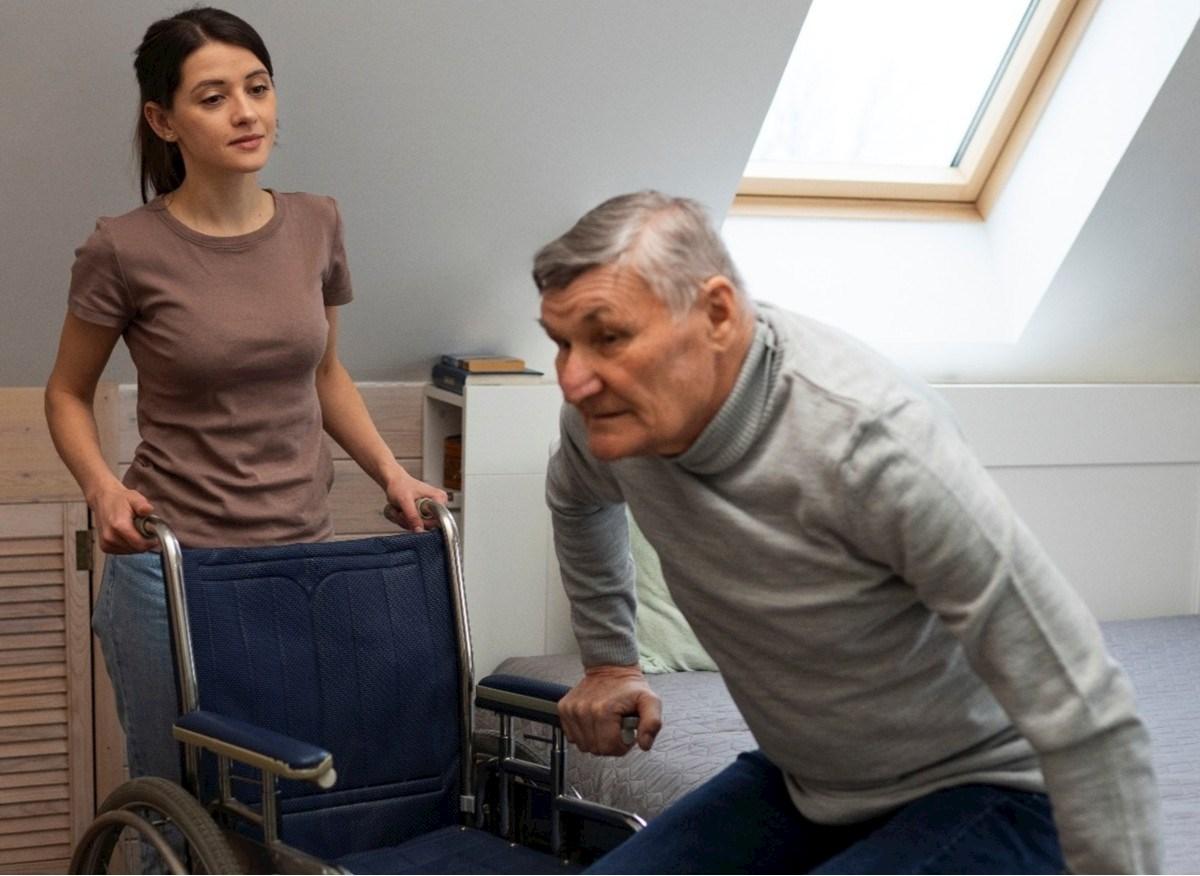
Understanding safe moving and handling practices for people with disabilities
This course introduces a practical model for understanding necessary and unnecessary moving and handling when supporting people with disabilities, and applies it across weight-bearing and non-weight-bearing care tasks using safe patient handling principles. Participants will learn how to assess complex care tasks, guide care staff in safe techniques, and translate this knowledge into effective interventions, training, and clear safe work procedures for real-world situations.
Program Overview
******* This session has sold out. If you would like to be added to the waitlist and be notified when the workshop is next scheduled, please send an email to info@otaus.com.au.******
Occupational therapists are frequently called upon to provide guidance and care plans for safe moving and handling for people with disabilities. Yet in practice, analysing complex care tasks, defining what is truly safe, and supporting workers and carers in real-world environments can be challenging. This event explores practical strategies to navigate these complexities with confidence and clarity.
This six-week professional development course provides a structured, practical introduction to moving and handling for people with disabilities across personal care and daily living activities. You will learn clear frameworks to understand when moving and handling is necessary, when it becomes unnecessary or unsafe, and how to intervene effectively as an OT.
This course is presented by internationally recognised occupational therapist, Aideen Gallagher and designed specifically for OTs, especially early career OTs, working in community, disability, and health settings, this workshop will help you build confidence in assessment, intervention, staff training, and the development of safe work procedures for both weight-bearing and non-weight-bearing clients.
Workshop Structure & Session Outline
This seven-week course blends flexible online learning with live, interactive sessions. Participants will access a series of pre-recorded webinars, complemented by 6 live online interactive sessions designed to enhance learning and practical application.
Each week, participants will be asked to view the pre-recorded webinar in advance of the interactive session. Webinars will be released one week prior to each live session, with the first webinar available from 18 February 2026.
The live interactive sessions will include a concise recap of the week’s webinar content, expanded discussion of key concepts, opportunities for reflection, and dedicated time for questions and answers.
Session 1: 25 February 2026, 12:30pm – 1:30pm AEDT
A Model for Understanding Moving and Handling for People with Disabilities
This session introduces a practical model for understanding moving and handling in collaboration with people with disabilities during everyday activities such as getting out of bed, toileting, showering, and dressing. You will learn how moving and handling shifts from the necessary to the unnecessary range, and how this impacts client and worker safety.
We will explore how this model applies to both weight-bearing and non-weight-bearing clients, and how it can guide assessment, intervention, worker training, and documentation of safe work procedures. This session provides the foundation for the entire course.
Session 2: 4 March 2026, 12:30pm – 1:30pm AEDT
Factors That Influence Necessary and Unnecessary Moving and Handling
Using the TILE framework (Task, Individual, Load, Environment), this session explores the key factors that influence when moving and handling becomes necessary—and when it becomes unsafe or avoidable.
A strong focus is placed on the worker as a critical factor. We will examine how workers influence their own health and safety, what and how we teach workers, and how physical, social, and emotional elements of care affect decision-making in practice.
Session 3: 11 March 2026, 12:30pm – 1:30pm AEDT
Weight-Bearing Clients and Necessary Moving and Handling
This session focuses on understanding weight-bearing clients and the three common categories of assistance they require. We unpack typical personal care routines using the model introduced in Session 1 and apply safe patient handling principles to real-world tasks.
You will gain clarity on what safe moving and handling looks like for weight-bearing clients and how to confidently demonstrate and explain safe techniques to workers and carers.
Session 4: 18 March 2026, 12:30pm – 1:30pm AEDT
Non-Weight-Bearing Care – Bed Mobility Tasks
This session focuses on non-weight-bearing clients during bed-based care. Using the moving and handling model, we examine what good technique looks like when clients are positioned in lying.
We will explore various tasks including:
-
Rolling in lying
-
Fitting and removing hoist slings in lying
-
Dressing in bed
-
Assisting with showering using a bath shower trolley
Both manual handling and equipment-based approaches are explored, with a strong emphasis on worker safety and client dignity.
Session 5: 25 March 2026, 12:30pm – 1:30pm AEDT
Non-Weight-Bearing Care –Transfers, Hoisting & Seating
Building on Session 4, this session explores hoisting, transfers, positioning, and seated care for non-weight-bearing clients.
Task groupings to be explored include:
-
Room setup and equipment preparation
-
Moving hoists to and from equipment
-
Attaching and removing slings from lying and sitting
-
Positioning in chairs
-
Showering in sitting
You will develop a deeper understanding of task sequencing, risk reduction, and how to guide workers through complex care routines safely.
Session 6: 1 April 2026, 12:30pm – 1:30pm AEDT
Bringing It All Together – Assessment, Intervention & Safe Work Procedures
In the final session, all learning is integrated into a clear OT process. You will learn how to use the necessary/unnecessary moving and handling model to:
-
Plan and conduct assessments
-
Design practical interventions
-
Deliver effective worker training
-
Develop clear, defensible safe work procedures
This session focuses on applying your learning to real clients and services, ensuring you leave with a framework you can use immediately in practice.
By attending this course, you will:
-
Build confidence in safe moving and handling
-
Learn practical frameworks, not just theory
-
Understand what “safe care” actually looks like—and when it becomes unsafe
-
Improve your ability to train carers and support staff effectively
-
Learn how to develop safe work procedures
-
Be able to apply your learning directly to practice
This course is suitable for:
Early career occupational therapists and OTs keen for a refresher who may be working across disability, community, NDIS, and health settings, particularly those seeking practical tools for moving and handling assessments or responsible for staff training such as care staff.
WORKSHOP DETAILS:
DATES:
Course runs from 18th February 2026 to 1st April 2026
As noted above, the course is a combination of recorded webinars completed when it suits you and 5 interactive online live sessions. Recorded webinars will be provided weekly starting 18th February.
Online live interactive sessions
Wednesday 25th February 2026 (Session 1)
Wednesday 4th March 2026 (Session 2)
Wednesday 11th March 2026 (Session 3)
Wednesday 18th March 2026 (Session 4)
Wednesday 25th March 2026 (Session 5)
Wednesday 1st April 2026 (Session 6)
TIME:
All 6 live interactive sessions will be held at:
12:30pm – 1:30pm | VIC, NSW, ACT, TAS |
12 noon – 1:00pm | SA |
11:30am – 12:30pm | QLD |
11:00am – 12noon | NT |
9:30am – 10:30am | WA |
The sessions will run for approximately 60 minutes.
Please login 10 minutes before the scheduled presentation time
VENUE
This is a 100% virtual event. You will receive an email with details to access the recorded webinars in your OTA Account and details to access the live online sessions via zoom. The zoom details will be sent one day ahead of the scheduled event date.
CPD HOURS:
Total CPD claimable workshop hours: 9 hours
Please allow 48 hours for your CPD Certificate to be loaded in your CPD Tracker after course completion.
ACCESS:
Participants will be able to access the course materials including the recorded webinars online in their OTA account throughout the course and for a further 12 weeks after the final session.
The live interactive sessions will not be recorded due to the interactive nature of the session.
REGISTRATION FEES
EARLYBIRD – Book on or before 31 January 2026
OTA Member: $325
OTA Student/New Graduate Member: $290
Non-member: $420
STANDARD – Book on or after 1 February 2026
OTA Member: $360
OTA Student/New Graduate Member: $325
Non-Member: $470
(All pricing is inclusive of GST)
RSVPS close 11:55pm AEDT on 17 February 2026
Members must be logged in with username and password in order to register at the member rate.
Not already an OTA member? Sign up today here to enjoy great savings on CPD courses, events, conferences and unlimited access to local and international research publications, special offers from our partners and more!
DISCLAIMER
All information is correct at the time of publication. OTA reserves the right to alter or delete items from the CPD calendar as required, and takes no responsibility for any errors, omissions, and changes.
All resources including copies of the presentation, along with all supporting documents and links are not for distribution and are the property of the presenter.
An OTA staff member or representative may be photographing this event for use in OTA publications and/or on OTA social media sites. If you do not wish to be photographed, or have your image published please make this known to the OTA representative at your course or contact OTA on 1300 682 878 or info@otaus.com.au
TERMS AND CONDITIONS
Terms and Conditions including OTA’s refund and cancellation policy are available here
CONTACT US
Please email info@otaus.com.au or phone 1300 682 878
Presented By

Aideen Gallagher
Aideen Gallagher has worked with support workers and people with disabilities for the last 24 years. She has a degree in occupational therapy and a master’s degree in Occupational Health and Safety. She has worked as a lecturer in occupational therapy for four years at the National University of Ireland, Galway, and she has published 10 articles in peer-reviewed academic journals. In 2018, Aideen was a finalist for the Safe Work NSW Leadership Award in Work Health and Safety, authored the Amazon #1 bestselling book The Manual Handling Revolution in 2018 and SmartCare in 2021. She has created the SmartCare Passport, a manual handling plan creator, that won an award for productivity in care in 2022.